
Call: 08045800273
 Send Inquiry
 Send Inquiry
Flares for Refining & Petrochemical
Flares for Refining & Petrochemical Specification
- Product Type
- Flares System
- General Use
- Refining & Petrochemical Plant Emission Control
- Material
- Stainless Steel / Carbon Steel (as per requirement)
- Type
- Elevated & Ground Flare
- Capacity
- Custom (10,000 - 1,00,000 Nm/hr)
- Computerized
- Yes
- Automatic
- Yes
- Control System
- PLC / DCS Based
- Cooling System
- Air or Water Cooled Options
- Purity(%)
- Up to 99% Clean Burn
- Production Rate
- Continuous
- Dew Point
- -60 C to 0 C
- Pressure
- 0.1 - 2.5 kg/cmg
- Power Consumption
- 1-5 kW (Based on System)
- Weight (kg)
- As per Design
- Voltage
- 230 / 415 V AC
- Dimension (L*W*H)
- Custom Engineered
- Feature
- Smokeless, Reliable Ignition, Low Maintenance, High Flare Efficiency
- Color
- Silver or Custom
About Flares for Refining & Petrochemical
Flares for Refining & Petrochemical
Air assisted flare
- Designed to dispose of heavier hydrocarbon gases that have a greater propensity to smoke, Air Assisted flares use blowers to introduce combustion air into the gas stream as it exits the flare tip.
- A low-pressure blower blows combustion air into an additional riser forcing air into the flare tip, where this air intermixes with the process gas providing clean, economical flaring, extra long flare tip life and reducing emissions.
Steam Assisted Flares
- Designed to dispose of heavier hydrocarbon gases that have a greater propensity to smoke, Steam Assisted flares use injected steam and mix air into the waste gas combustion zone to provide turbulence and allow for a completely smokeless operation.
- The system directs steam into the waste gas using central steam spargers, peripheral rings and inner induction tubes (optional).
Salient Features
- Capital & Cost effective due to simple design and minimal maintenance
- Continous or intermittent pilot function that offer low fuel consumption
- Aspirator burner design allows for high efficiency
- Available in Guy wired & Self Supported Structures
- Modular design allows for easy installation
Areas of Application
- Petroleum (Oil and Gas) refining & production
- Chemical processing
- Food Processing & pulp and paper plants
- Refining, LNG and Natural Gas compression and production
- Steel industries
- Petrochemical and Pharmaceutical industries.
Advanced Ignition & Control Systems
Our flare systems integrate piloted electric, manual, and auto re-ignition modules, supported by PLC and DCS-based control. This ensures uninterrupted flare operation and rapid response to changing process conditions, optimizing safety and compliance. Automatic and semi-automatic modes foster operational flexibility, making them ideal for dynamic refinery and petrochemical requirements.
Compliance & Safety Features
Designed to meet CPCB and international safety standards, each flare stack undergoes comprehensive wind load and thermal radiation simulation according to API 521. Multiple accessories like flame and detonation arrestors guarantee maximum protection. Noise levels are maintained below 85 dB(A) at a 1-meter radius, ensuring both environmental and occupational safety.
Custom Engineering & Installation
Our flares are custom-engineered for a production rate ranging from 10,000 to 1,00,000 Nm/hr, stack heights up to 60 m, and various materials including stainless and carbon steel. We provide full on-site erection and commissioning services, tailoring flare systems to application-specific requirements and site conditions, including unique cooling and dimensional specifications.
FAQs of Flares for Refining & Petrochemical:
Q: How are the flares for refining and petrochemical applications installed on site?
A: Our flares are installed through on-site erection and commissioning, managed by experienced service teams. Each flare system is custom engineered and assembled according to site-specific requirements, ensuring optimal integration into refining and petrochemical plants.Q: What ignition system options are available, and how do they improve reliability?
A: The flare systems feature piloted electric, manual, and auto re-ignition options. These ignition systems, managed via PLC or DCS controls, ensure rapid and reliable ignition, minimizing operational interruptions and providing immediate response in case of flame-out events.Q: When should a PLC or DCS control system be selected for flare operation?
A: PLC and DCS control systems are recommended when automated control, real-time monitoring, and integration with plant-wide safety systems are required. These controls are essential for large-scale refinery and petrochemical plants where precision, process data tracking, and safety interlocks are critical.Q: Where can these flares be applied in the industry?
A: These flares are suitable for refining, petrochemical, hydrocarbon processing, and hazardous emission environments. Typical applications include gas processing units, vapor recovery, and emergency venting systems within industrial plants in India and internationally.Q: What is the process behind ensuring compliance with emission and safety standards?
A: Compliance is achieved by designing flare systems to meet CPCB and international emission guidelines. Thermal radiation is calculated as per API 521, and accessories such as flame arrestors and seal pots are included to meet stringent safety and environmental standards.Q: How do accessory options enhance the performance and safety of flare systems?
A: Accessories like flame arrestors, detonation arrestors, knock out drums, seal pots, and flash arrestors are vital for controlling backfire risks, separating condensates, and preventing hazardous emissions, thereby increasing overall plant safety and flare efficiency.Q: What are the key benefits of using this flare system in refining and petrochemical plants?
A: Key benefits include smokeless, high-efficiency combustion, low maintenance, reliable ignition, and compliance with global safety standards. The system offers custom capacity, continuous production, and noise levels below 85 dB(A), ensuring both operational safety and environmental stewardship.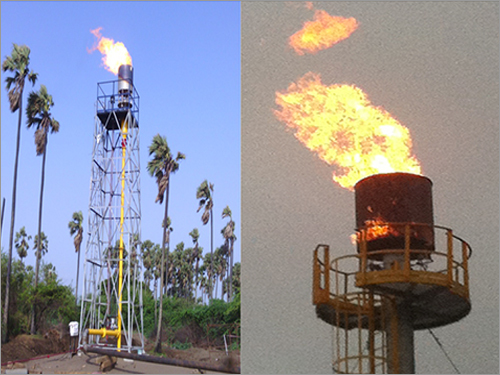
Tell us about your requirement

Price:
Quantity
Select Unit
- 50
- 100
- 200
- 250
- 500
- 1000+
Additional detail
Mobile number
Email


Contact Details
COMBUSTION RESEARCH ASSOCIATES
GST : 09ADFPA9876Q1ZN
- A-52, SECTOR-83, PHASE-II,Noida - 201305, Uttar Pradesh, India
- Phone :08045800273
 Send Inquiry
Developed and Managed by Infocom Network Private Limited.
